When Was Color Photography Invented: Unveiling History
February 11, 2026

Explore how color photography was invented—from early scientific experiments to modern digital tools—and see how centuries of discovery still shape the way we edit and experience images today.
The history of color photography began long before the advent of the first films, when the dream of capturing the world in all its diversity seemed like pure alchemy to contemporaries. The first researchers of the 19th century were not simply seeking chemical compositions. They were attempting to harness light itself, striving to make it reveal the true natural colors of objects, beyond just their outlines on glass. Even if color was successfully captured, it quickly faded under the influence of sunlight, reverting to monochrome.
Each new attempt ended like hundreds before it: inevitable failure. The real technological breakthrough came in 1861, when physicist James Clerk Maxwell presented the world with the first reliable color projection. Using three separate filters: red, green, and blue, he proved that any shade of reality could be recreated by mixing. The moment when was the first color photograph taken became a turning point for all of humanity, turning the ability to “capture frames” from theoretical fantasies into scientific reality.
Give your images character with filters
Browse Photo FiltersThe Origins of Color Photography
After Maxwell demonstrated his technology, researchers were filled with hope—it was the first step toward conquering time. Of course, this method was neither elegant nor convenient: the image required cumbersome equipment and the simultaneous use of three projectors to achieve the effect. The situation changed only in 1907, when the Lumière brothers presented their “Autochrome.”  Officially, it was the first method that made it possible to capture the palette of the world on a single glass plate without the need for a complex optical system.
Talking about when did color photos first showed up in the way we know them today, 1935 was the starting point. The advent of Kodachrome film made it possible to combine all layers into a single flexible roll that easily fit into a compact camera.  From that moment on, color ceased to be a scientific attraction and became an accessible tool with which people around the world began to document life in its natural colors.
Early Methods and Experiments in Color Capture
Instead of inefficient manual coloring, some researchers decided to focus on creating materials that were sensitive to specific parts of the spectrum. Gabriel Lippmann occupies a special place in this part of history, having obtained the first color photo without the use of pigments long before mass technology became available, using only the physical properties of light waves. His interference method produced strikingly vivid and durable colors, but the complexity of the process and the need to work with hazardous reagents prevented this technology from leaving the confines of scientific laboratories.
Although Lipman's method was technically complex, his discovery forced the industry to finally recognize that the future lay in the physics of light. The search for more stable solutions took longer than planned, but ultimately, scientific enthusiasm led to the creation of multilayer emulsions: from that moment on, obtaining natural shades became a matter of calculation rather than a lucky coincidence.
Additive and Subtractive Color Techniques
The foundation of modern color work was laid by two opposing approaches: additive and subtractive. In the first case, shades are created by mixing the rays of light of the three primary colors. The simplest and most familiar example is smartphones, whose screens operate on the basis of this solution. The subtractive method, which became the basis for printing and color film, works differently: it subtracts certain wavelengths from white light using dyes. 
Understanding the physical processes involved helps us to appreciate the complexity of the path that the industry has traveled since color photography invented in the mid-19th century. Whereas photographers used to have to manually apply filters and monitor pigment layering, modern algorithms do this in a fraction of a second. Even complex manipulations with color schemes and light balance can be entrusted to AI-based tools. They automatically adjust the palette of a photo based on the same principles of color mixing discovered a century ago.
Add timeless warmth with sepia tones
Apply Sepia FilterAdvances in Color Sensitization and Film Technology
 For a long time, the low sensitivity of materials to the red part of the spectrum remained a stumbling block, which is why this color looked almost black in early photographs. A breakthrough in emulsion sensitization finally enables photographers to capture the entire palette of the visible world without resorting to exhausting exposures under the scorching sun.
These achievements in chemistry defined the period when were color photos invented as a full-fledged technology capable of conveying the subtlest nuances of sunsets and the natural shades of human skin. With the advent of multilayer films, the process became even more refined: since each layer was responsible for its own range of light, mixing pigments into dirty spots became simply impossible.
The Public Introduction and Commercialization of Color Photography
The world was able to see the full spectrum of reality for the first time in 1907, when Autochrome glass plates went on sale to the public.  Despite their high cost and the need for long exposure times, this was the first time in history that color was no longer a laboratory secret. However, when did color photos become popular among millions of people came much later: with the advent of affordable 35mm film in the mid-1930s.
For us, photos are an everyday thing: we take them at home, while out walking, or even at work, without realizing how much painstaking work goes into them. But even in the age of delivery drones and AI-generated cat videos, it is still possible to experience the feeling of “discovering” something new. Just install Luminar and upload any photo: what happens next can only be described as alchemy or magic on the screen.
Add timeless warmth with sepia tones
Apply Sepia FilterThe Transition from Film to Digital Color Imaging
 The change of eras occurred when chemical processes gave way to sensors capable of instantly encoding light flux into files. Although the foundation for when were colored photos invented was laid in 19th-century laboratories, it was the digital matrix that gave authors absolute control over every pixel.
Today's stage of photography development has shifted the focus from the moment the shutter button is pressed to the possibilities of post-processing: a mistake or an object that accidentally got into the frame is no longer a cause for concern, as they can be easily removed using Luminar or Photoshop. Skillful use of digital software gives images a plasticity and softness of gradients that couldn’t be achieved even with the most expensive film.
Explore the Power of AI with Luminar Neo
Discover Now!Influential Figures and Innovators in Color Photography
We have already mentioned the main pioneers who laid the physical foundations of the method, but we would like to focus more on the people whose contributions we can still see even after many decades. It was their persistence in searching for new chemical formulas that enabled them to overcome the barrier of monochromaticity, paving the way for full-fledged artistic retouching.
Ducos du Hauten. One of the first theorists and practitioners to describe and then implement the subtractive method of color mixing. He can be considered the godfather of color printing.
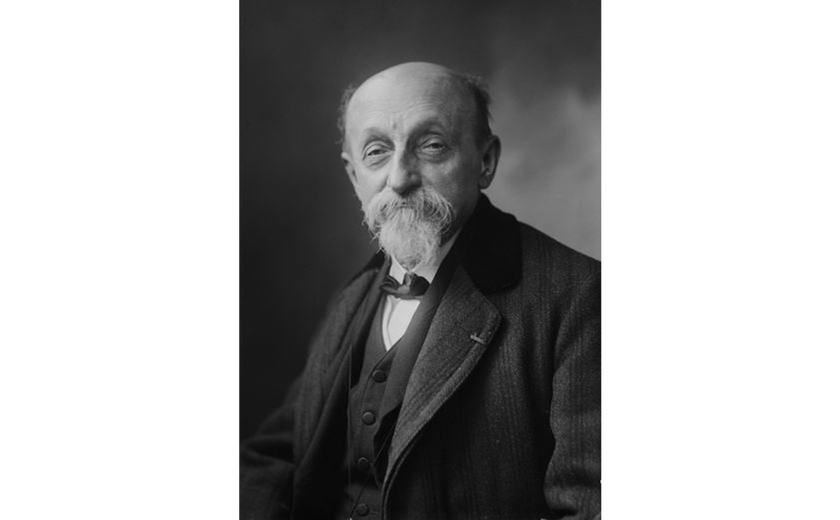
Frederick Ives. He designed the “Cromoscope” system, which provided a three-dimensional and realistic perception of color images: thanks to the ideas of this talented man, our cameras now fit in our jeans pockets.
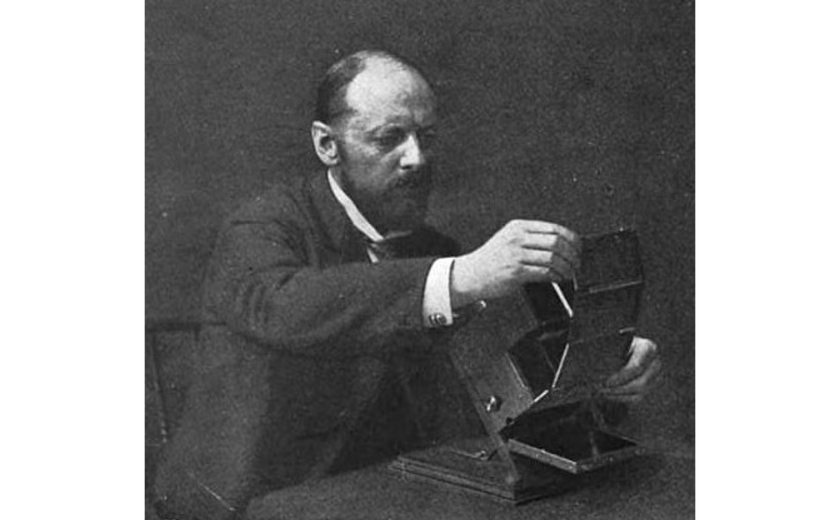
John Jolly. Developed the first method of obtaining color on a single plate using a linear halftone. This small detail became a fundamental cog in the process, uniquely simplifying mass photography.
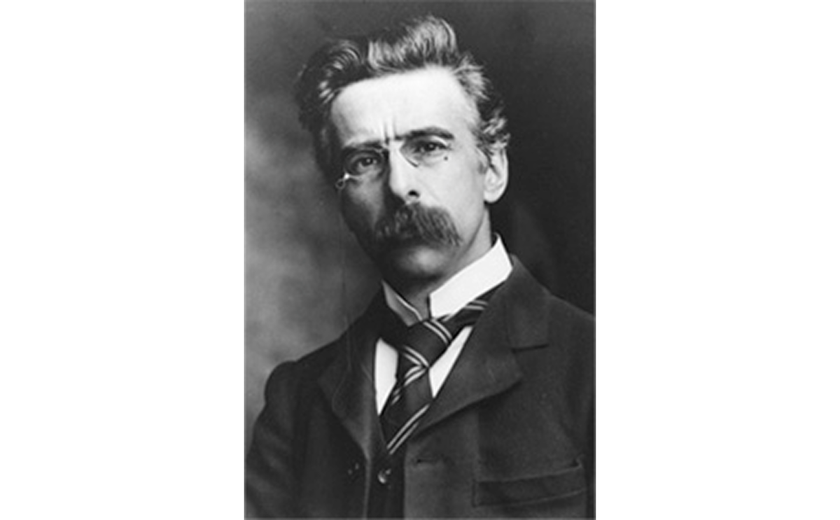
Adolphe Niepce. Improved the camera for three-color image capture, achieving perfect layer alignment and exceptional image clarity.
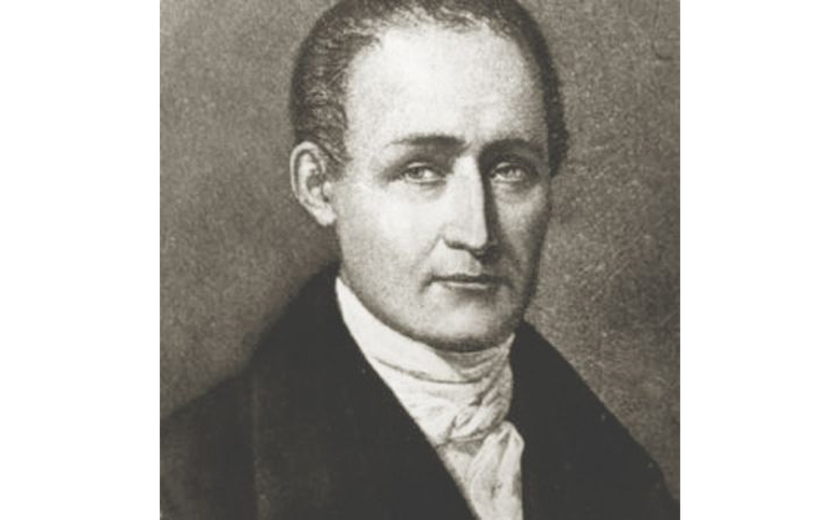
Advanced editors use mathematical models that accurately mimic the behavior of old photographic film. By applying filters, the program does more than just change the color. It “recreates” the chemical reaction of the emulsion, providing the very smooth transitions that masters sought to achieve in the late 19th century, when did color photography begin.
A thorough understanding of history gives retouchers clear visual guidelines for adjusting the balance in shadows and the correct distribution of contrast. Knowing how old film reacted to light, you can consciously adjust the saturation of individual channels to simulate the corresponding effect. It is unlikely that you will be able to use this knowledge in practice regularly, but it is not required: AI-based assistants will help you solve routine tasks, leaving only special decisions to humans.
Preserving and Storing Color Photographic Works
 Proper storage of color photographs requires strict control of temperature and humidity: organic dyes in emulsions are extremely sensitive to the external environment and can be ruined by the slightest mistake. Unlike black-and-white images, which remain stable for decades, the pigments in old prints are prone to fading and chemical decomposition when exposed to ultraviolet light. Collectors are aware of this fragility, so they create acid-free envelopes and dark archives to extend the life of images created since when was the first color photograph taken in the mid-nineteenth century.
The digital age has simplified the issue of preservation by letting physical originals be converted into high-resolution files to protect them from physical wear and tear. Regular backups and the use of cloud storage ensure that color reproduction remains consistent regardless of environmental conditions.
Your AI-Powered Photo Editor for MacOS and Windows
Discover Now!TheNext Chapter of History
Photography has evolved from frozen drops of chemicals to flexible streams of data, becoming increasingly accessible and sophisticated. The boundaries between complex science and the simple push of a button are becoming increasingly blurred with each passing year, empowering users without experience or knowledge to create truly impressive images.